

The 40-Year Nap: Why 'Smart' Showers Missed the Mark

The 'Smart' Pivot (And Why It Wasn't Engineering)
The moment people started noticing the stagnation, The Giants didn’t double down on water mechanics. They sidestepped.
They went “smart.”
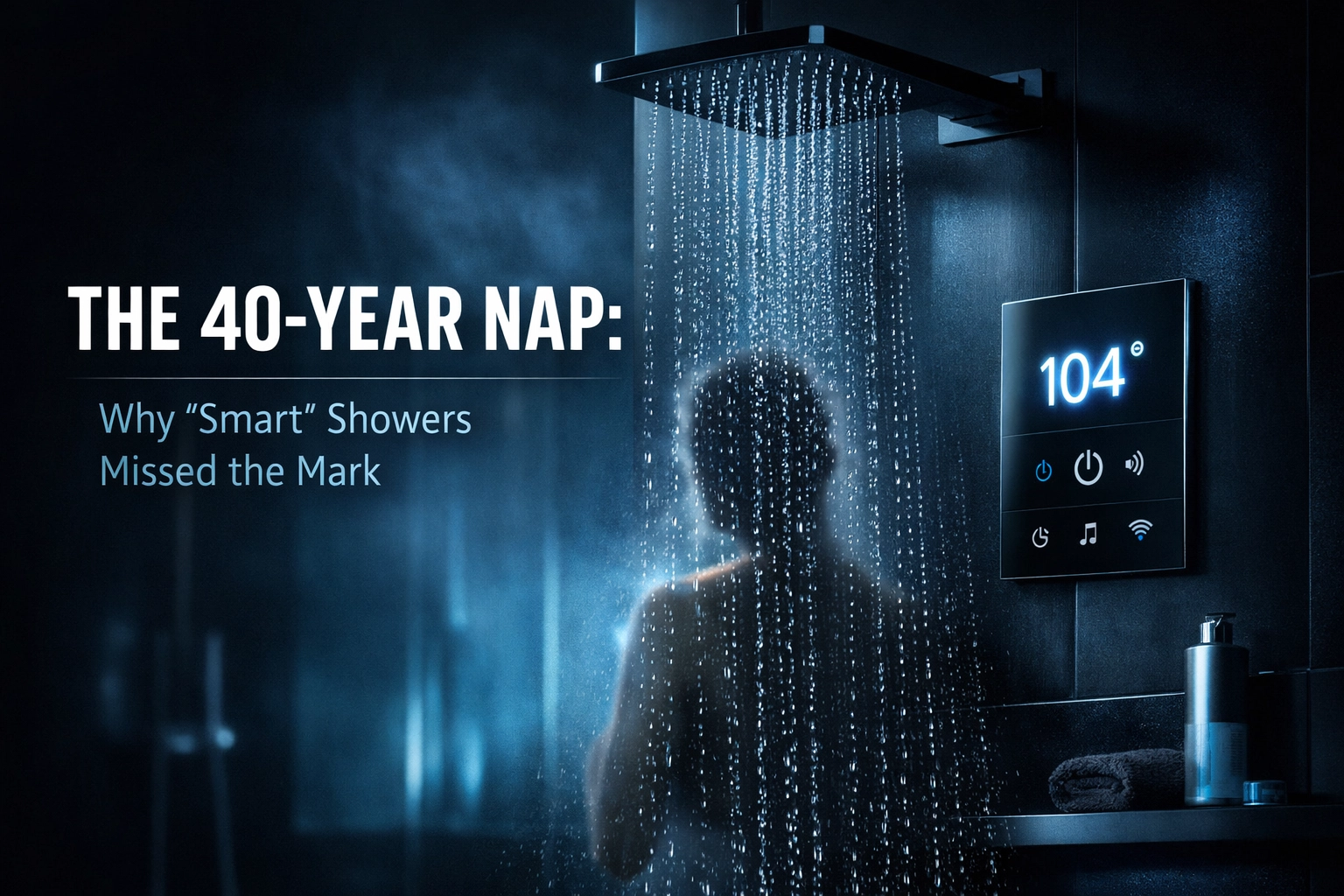
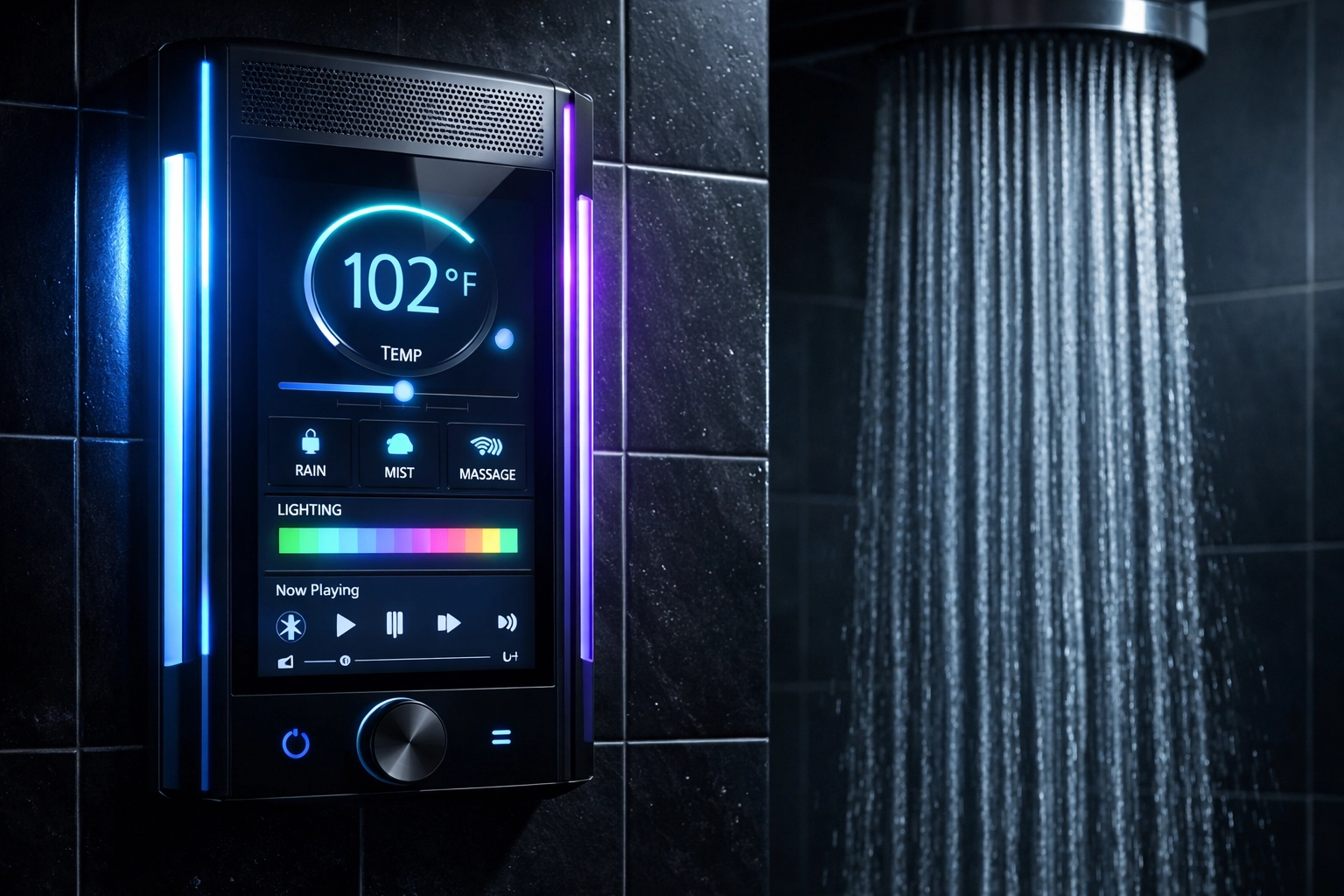
Touchscreens. Apps. Voice control. LEDs. Bluetooth. Sleek panels that look like progress while the actual shower—the part that hits your body—stayed basically frozen in place.
That wasn’t a breakthrough. It was a pricing strategy with a UI.
Because none of that changes the physics:
Water still drops from one fixed point
You still do the awkward turn-and-rinse routine
“Massage mode” is still just more pressure through fewer holes
Real engineering would’ve asked a harder question: How should water move to relax the human body—hands-free—without you shuffling around?
Instead, “smart” became the pivot away from that question.
Why? Because screens are easy. Commodity chips are easy. A companion app is easier than rethinking spray geometry, coverage, oscillation, and the way water actually interacts with muscle.
So you got innovation theater: the appearance of advancement, layered over the same old experience.
That’s what they missed: Mechanical Wellness—the idea that the mechanics of water (movement, targeting, coverage) are where real relaxation lives. Not in mood lighting. Not in notifications. Not in a digital temperature readout.
The 40-Year Question, Answered
So why did showerheads stay the same for 40 years?
Because The Giants found a formula that worked: for them. Low innovation cost, high margin markup, captive audience. You need a shower. You'll buy whatever they make. Why invest in hard mechanical engineering when you can coast on finishes and spray pattern variations?
And when that strategy finally started showing cracks, they pivoted to the easiest possible "innovation": consumer electronics grafted onto plumbing. It gave them marketing language. It justified price increases. It made reviews and product pages look impressive with bullet-pointed features.
But it didn't solve the core problem: your shower still doesn't actually do anything therapeutic for your body.
The industry jumped to "smart" because it was easier than getting mechanical. Screens and apps don't require rethinking fundamental water dynamics. They don't demand new manufacturing processes or precision engineering. They're just a tech layer on top of the same old design.
It's innovation avoidance dressed up as progress.

What Should Have Happened
Imagine if, instead of asking "What gadgets can we add?": the industry had asked "What does the human body actually need from a shower?"
The answer isn't mood lighting. It's not temperature presets saved to an app. It's not a speaker playing your Spotify playlist.
It's mechanical action. Movement. Coverage. Targeted pressure that reaches more than just your head and upper shoulders. The kind of dynamic water interaction that actually relaxes tense muscles, improves circulation, and turns a morning routine into a therapeutic experience.
That's the innovation that should have happened 20 years ago. That's what the 40-year nap stole from you.
Instead, we got showers that are "smart" in all the wrong ways: connected to Wi-Fi but disconnected from what your body actually needs.
The Wake-Up Call
The good news? The 40-year nap is ending.
Because when you strip away the LED lights and Bluetooth speakers and app integrations: when you stop mistaking digital features for physical innovation: the path forward becomes obvious:
Focus on the mechanics. Focus on the water. Focus on what actually touches your body.
That's not where The Giants went. But it's where they should have gone. And it's where the real innovation was hiding this whole time: buried under 40 years of stagnation and a decade of "smart" distractions.
The question isn't "How do we make showers more connected?"
The question is: "How do we make showers actually work?"
The Giants missed the mark. But somebody didn't. More on that soon.
Comments